
 Guitar Department
 Bass Department
 Drum Department
 Piano & Keys Department
 Orchestral Department
 Brass & Woodwind
 Acoustic Guitars
 Steel String Acoustics
 Nylon Strings Acoustics
 12-String Acoustics
 Electric Guitars
 Solidbody Guitars
 Semi-hollowbody Guitars
 Hollowbody
 7 & 8 String Electrics
 Headless Guitars
 Ukuleles
 Guitar Strings
 Electric Strings
 Guitar Amplifiers
 Combo Amps
 Amp Heads
 Amp Cabs
 Acoustic Guitar Amps
 Portable Guitar Amps
 Effects Pedals
 Multi-Effects Pedals
 Distortion, Fuzz & Overdrive
 Reverb pedals
 Delay Pedals
 Boost Pedals
 Amp Sims & Modelers
 Compressor Pedals
 EQ Pedals
 Modulation Pedals
 Looper Pedals
 Octave Pedals
 Wah Pedals
 Tuner Pedals
 Pedalboards & Accessories
 Power Supplies
 Guitar Accessories
 Capos
Capos Guitar Straps
 Guitar Tuners
 Guitar Stands
 Guitar Hangers
 Guitar Picks
 Guitar Humidifiers
 Guitar Maintenance
 Guitar Slides
 Guitar Wireless Systems
 Guitar Pickups
 Guitar Bags & Cases
 Electric Bass Guitars
 Acoustic Bass Guitars
 Bass Amps
 Bass Guitar Strings
 Bass Wireless Systems
 Bass Guitar Accessories
 Acoustic Drums
 Snare Drums
 Cymbals
 Cymbal Packs
 Hats
Hats Crashes
 Rides
Rides Chinas
 Splashes
 Electric Drums
 Electric Pads, Triggers & Modules
 Sticks & Beaters
 Drum Sticks
 Brushes & Rods
 Drum Hardware
 Drum Heads
 Drum Accessories
 Percussion
 Marching Band
 Marching Bass Drums
 Marching Snare Drums
 Marching Tenor Drums
 Marching Band Accessories
 Drum Bags & Cases
 Grand Pianos
 Digital Grand Pianos
 Upright Pianos
 Digital Upright Pianos
 Digital Portable Pianos
 Home Keyboards
 Arranger Workstations
 Synthesizers
 Piano & Keyboard Accessories
 Benches & Stools
 Piano & Keyboard Pedals
 Piano & Keyboard Stands
 Violins & Violas
 Electric Violins
 Cellos
 Double Bass
 Orchestral Bags & Cases
 Sheet Music Stands
 Saxophones
 Alto Saxophones
 Soprano Saxophones
 Tenor Saxophones
 Baritone Saxophones
 Trombones
 Trumpets
 Flutes
 Harmonicas
 Clarinets
 Cornet & Flugelhorn
 Recorders
 Woodwind Accessories
 Reeds
Reeds Mouthpieces
 Straps & Harnesses
 Woodwind Parts
 Bags & Cases
 Audio Interfaces
 Studio Monitors
 Studio Microphones
 Studio Preamps
 Studio Mixers
 Studio Synths
 Keyboard Controllers
 Studio Controllers
 Signal Processors
 Studio Bundles
 Studio Software
 Broadcast & Video
 Podcasting & Streaming
 Live Mixing Consoles
 Analogue Mixers
 Powered Mixers
 Mixer Bags & Cases
 Speakers
 Active Speakers
 Passive Speakers
 Active Subwoofers
 Passive Subwoofers
 Portable Speakers
 Column Array Systems
 Microphones
 Wireless Microphones
 Power Amplifiers
 Digital Snakes/Stage Boxes
 Cables & Connectors
 Microphone Cables
 Speaker Cables
 Signal Cables
 Adaptors
 Connectors
 DI Boxes
 Microphone Stands
 Speaker Stands
 Live Events Gear
 Line Array Systems
 Stage Lighting
 Staging
 Trussing
 100v Line Systems
 CD & Media Players
 DJ Mixers
 DJ Controllers
 DJ Accessories
 DJ Bags & Cases
 In-Ear Monitors
 Studio Headphones
 DJ Headphones
 Wireless Headphones
 Earphones
 Hi-Fi Headphones
 Cables & Accessories
 T-Shirts
 Hoodies
 Headwear
 Mugs & Glasses
 Accessories
Scarlett 2i2 – A Global Phenomenon

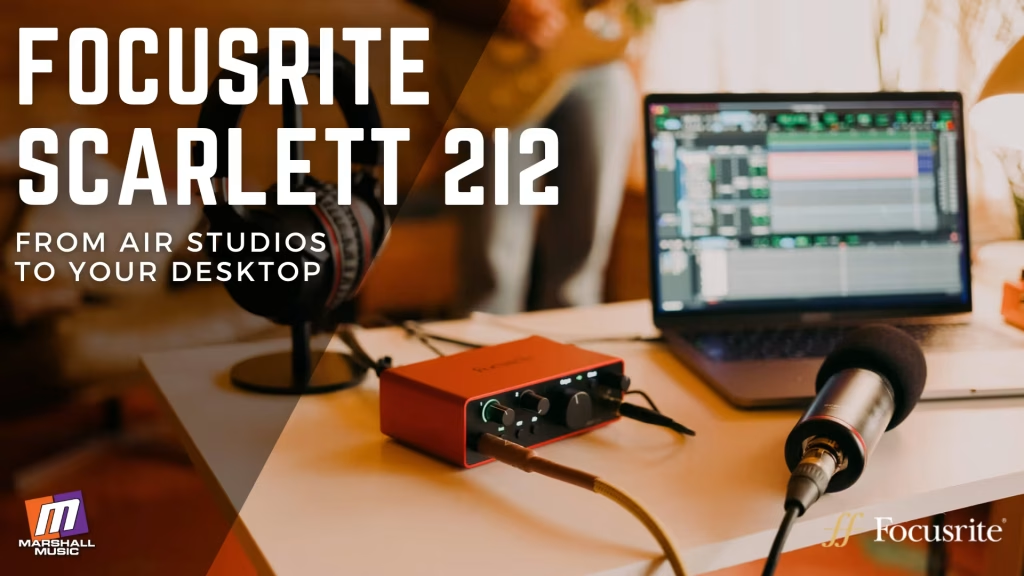
When you see that iconic red box in a home studio, you aren’t just looking at a piece of hardware; you’re looking at a legacy that started with a custom request from The Beatles’ producer, Sir George Martin.
The Focusrite Scarlett 2i2 isn’t just an interface – it’s the bridge that brought high-end British console sound to the masses. Here is the story of how a luxury brand became the world’s most popular recording tool.

The Heritage: From Air Studios to Your Desktop
To understand why the 2i2 matters, you have to go back to 1985. The legendary Rupert Neve founded Focusrite after Sir George Martin commissioned him to build a “no-compromise” mic preamp and EQ for Air Studios. This resulted in the ISA 110 (Input Signal Amplifier), a design so pristine it became the gold standard for professional audio.

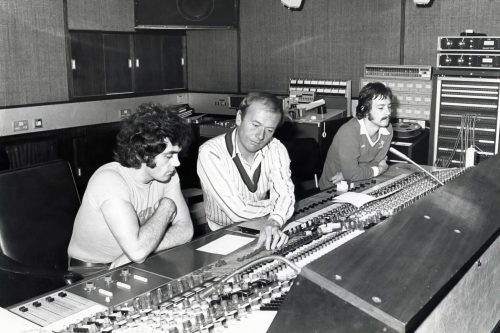
For decades, Focusrite was synonymous with massive, six-figure mixing consoles found only in the world’s elite studios. However, when industry veteran Phil Dudderidge (formerly of Soundcraft) took the helm, he envisioned a way to put that “console sound” into the hands of bedroom producers.
The Birth of the 2i2
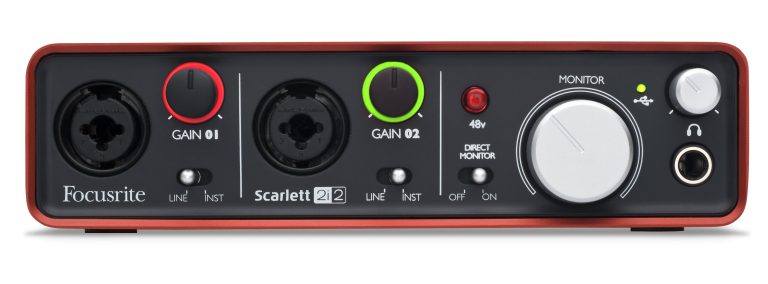
In 2012, Focusrite launched the first-generation Scarlett 2i2. Before this, home interfaces were often bulky, beige, and plagued by driver issues. The 2i2 changed the game with:
- The Look: A sleek, brushed red aluminum chassis.
- The Simplicity: “Plug and play” was finally a reality for Windows and Mac users.
- The Pedigree: It promised a hint of that ISA heritage at a price point under $200.
Why the 2i2 Became a Global Phenomenon
The Scarlett 2i2 has gone through four generations, each refining the formula. It became the global best-selling interface of 2025 and the winner of the 2024 Sound On Sound (SOS) Award because it finally closed the gap between “entry-level” and “professional.”
1. The “Air” Mode
Starting with the 3rd Gen and perfected in the 4th, the “Air” button is more than a marketing gimmick. It emulates the frequency response of the original ISA mic preamps, adding a high-end shimmer and clarity that makes vocals and acoustic guitars “pop” in a mix without needing heavy EQ later.
2. Flagship Conversion
In 2024 and 2025, Focusrite made a bold move by putting the same converters from their flagship RedNet series—interfaces used in multi-million dollar broadcast facilities—into the 2i2. This gave it a massive 120dB dynamic range, essentially ensuring that the interface is never the bottleneck in your sound quality.
3. Smart Features (Auto Gain & Clip Safe)
One of the main reasons it dominated the 2025 market was its accessibility. The 4th Gen introduced Auto Gain, which sets your levels for you, and Clip Safe, which acts like a “virtual engineer,” automatically adjusting your gain if you start playing too loud. It effectively made it impossible to ruin a take.

“Four years on, you might be forgiven for thinking there can’t be much left to improve in a fourth generation. Not so: while the new Scarlett will be instantly familiar to anyone acquainted with the third or previous generations, they better them in nearly every respect.” – Sound on Sound Magazine

Who is it For?
The 2i2’s target audience has expanded significantly over the last decade.
- Solo Musicians: The 2-in/2-out configuration is the “sweet spot.” You can record a vocal and a guitar (or a stereo synth) simultaneously.
- Podcasters: With 69dB of gain in the 4th Gen preamps, it can finally power gain-hungry mics like the Shure SM7B without needing an external booster (like a Cloudlifter).
- Content Creators: Features like Loopback allow streamers to route computer audio directly into their broadcast, making it a staple for YouTubers and gamers.
- The Traveling Pro: Its rugged build and USB-C bus power make it the standard “hotel room” interface for professional engineers on the road.
The Verdict
The Focusrite Scarlett 2i2 didn’t become the world’s favorite interface by being the cheapest; it won by being the most reliable. In a world of complex tech, Focusrite stayed true to Rupert Neve’s original mission: making sure the signal going in sounds exactly like the performance it’s capturing.
Whether you’re starting your first podcast or tracking vocals for a hit record, the “little red box” remains the safest bet in the industry.
