Guitar Department
 Bass Department
 Drum Department
 Piano & Keys Department
 Orchestral Department
 Brass & Woodwind
 Acoustic Guitars
 Steel String Acoustics
 Nylon Strings Acoustics
 12-String Acoustics
 Electric Guitars
 Solidbody Guitars
 Semi-hollowbody Guitars
 Hollowbody
 7 & 8 String Electrics
 Headless Guitars
 Ukuleles
 Guitar Strings
 Electric Strings
 Guitar Amplifiers
 Combo Amps
 Amp Heads
 Amp Cabs
 Acoustic Guitar Amps
 Portable Guitar Amps
 Effects Pedals
 Multi-Effects Pedals
 Distortion, Fuzz & Overdrive
 Reverb pedals
 Delay Pedals
 Boost Pedals
 Amp Sims & Modelers
 Compressor Pedals
 EQ Pedals
 Modulation Pedals
 Looper Pedals
 Octave Pedals
 Wah Pedals
 Tuner Pedals
 Pedalboards & Accessories
 Power Supplies
 Guitar Accessories
 Capos
Capos Guitar Straps
 Guitar Tuners
 Guitar Stands
 Guitar Hangers
 Guitar Picks
 Guitar Humidifiers
 Guitar Maintenance
 Guitar Slides
 Guitar Wireless Systems
 Guitar Pickups
 Guitar Bags & Cases
 Electric Bass Guitars
 Acoustic Bass Guitars
 Bass Amps
 Bass Guitar Strings
 Bass Wireless Systems
 Bass Guitar Accessories
 Acoustic Drums
 Snare Drums
 Cymbals
 Cymbal Packs
 Hats
Hats Crashes
 Rides
Rides Chinas
 Splashes
 Electric Drums
 Electric Pads, Triggers & Modules
 Sticks & Beaters
 Drum Sticks
 Brushes & Rods
 Drum Hardware
 Drum Heads
 Drum Accessories
 Percussion
 Marching Band
 Marching Bass Drums
 Marching Snare Drums
 Marching Tenor Drums
 Marching Band Accessories
 Drum Bags & Cases
 Grand Pianos
 Digital Grand Pianos
 Upright Pianos
 Digital Upright Pianos
 Digital Portable Pianos
 Home Keyboards
 Arranger Workstations
 Synthesizers
 Piano & Keyboard Accessories
 Benches & Stools
 Piano & Keyboard Pedals
 Piano & Keyboard Stands
 Violins & Violas
 Electric Violins
 Cellos
 Double Bass
 Orchestral Bags & Cases
 Sheet Music Stands
 Saxophones
 Alto Saxophones
 Soprano Saxophones
 Tenor Saxophones
 Baritone Saxophones
 Trombones
 Trumpets
 Flutes
 Harmonicas
 Clarinets
 Cornet & Flugelhorn
 Recorders
 Woodwind Accessories
 Reeds
Reeds Mouthpieces
 Straps & Harnesses
 Woodwind Parts
 Bags & Cases
 Audio Interfaces
 Studio Monitors
 Studio Microphones
 Studio Preamps
 Studio Mixers
 Studio Synths
 Keyboard Controllers
 Studio Controllers
 Outboard Gear
 Studio Bundles
 Studio Software
 Broadcast & Video
 Podcasting & Streaming
 Live Mixing Consoles
 Analogue Mixers
 Powered Mixers
 Mixer Bags & Cases
 Speakers
 Active Speakers
 Passive Speakers
 Active Subwoofers
 Passive Subwoofers
 Portable Speakers
 Column Array Systems
 Microphones
 Wireless Microphones
 Power Amplifiers
 Digital Snakes/Stage Boxes
 Cables & Connectors
 Microphone Cables
 Speaker Cables
 Signal Cables
 Adaptors
 Connectors
 DI Boxes
 Microphone Stands
 Speaker Stands
 Live Events Gear
 Line Array Systems
 Stage Lighting
 Staging
 Trussing
 100v Line Systems
 CD & Media Players
 DJ Mixers
 DJ Controllers
 DJ Accessories
 DJ Bags & Cases
 In-Ear Monitors
 Studio Headphones
 DJ Headphones
 Wireless Headphones
 Earphones
 Hi-Fi Headphones
 Cables & Accessories
 Alfred Books
 Bass Guitar Books
 Brass & Woodwind Books
 Drum Books
 Guitar Books
 Orchestral Stringed Books
 Piano and Keyboard Books
 Piano Tuition Books
 Piano and Keyboard Examination Material
 Play Along Books
 Theory Books
 Vocal Books
 Examination Books
 Sheet Music
 Book Clearance Sale
 T-Shirts
 Hoodies
 Headwear
 Mugs & Glasses
 Accessories
How to Choose an Audio Interface for Your Home Studio

A Deep Dive into MOTU M4, Lewitt Connect 6, and Arturia MiniFuse 4
Setting up a home studio is an exciting journey, but choosing the right audio interface can be a daunting task. The audio interface is the heart of your studio, acting as the bridge between your microphones, instruments, and your computer. It’s responsible for converting analog signals into digital data and vice versa, ensuring high-quality audio recording and playback.
In this blog post, we’ll explore the key factors to consider when choosing an audio interface and compare three popular models: the MOTU M4, the Lewitt Connect 6, and the Arturia MiniFuse 4. Each of these interfaces offers unique features, and understanding their strengths and weaknesses will help you make an informed decision.

Key Factors to Consider When Choosing an Audio Interface
Before diving into the specifics of each interface, let’s outline the key factors to consider:
- Input/Output (I/O) Count: How many microphones, instruments, or external devices do you need to connect simultaneously?
- Sound Quality: Look at the preamp quality, dynamic range, and sample rate/bit depth.
- Latency: Low latency is crucial for real-time monitoring and recording.
- Software Bundle: Many interfaces come with DAWs, plugins, or virtual instruments.
- Build Quality and Portability: Durable construction and portability are important for home studios.
- Connectivity: USB-C, Thunderbolt, or other connection types can affect compatibility and speed.
- Price: Balance your budget with the features you need.
Now, let’s compare the MOTU M4, Lewitt Connect 6, and Arturia MiniFuse 4 based on these factors.
MOTU M4: The Professional Workhorse
Overview
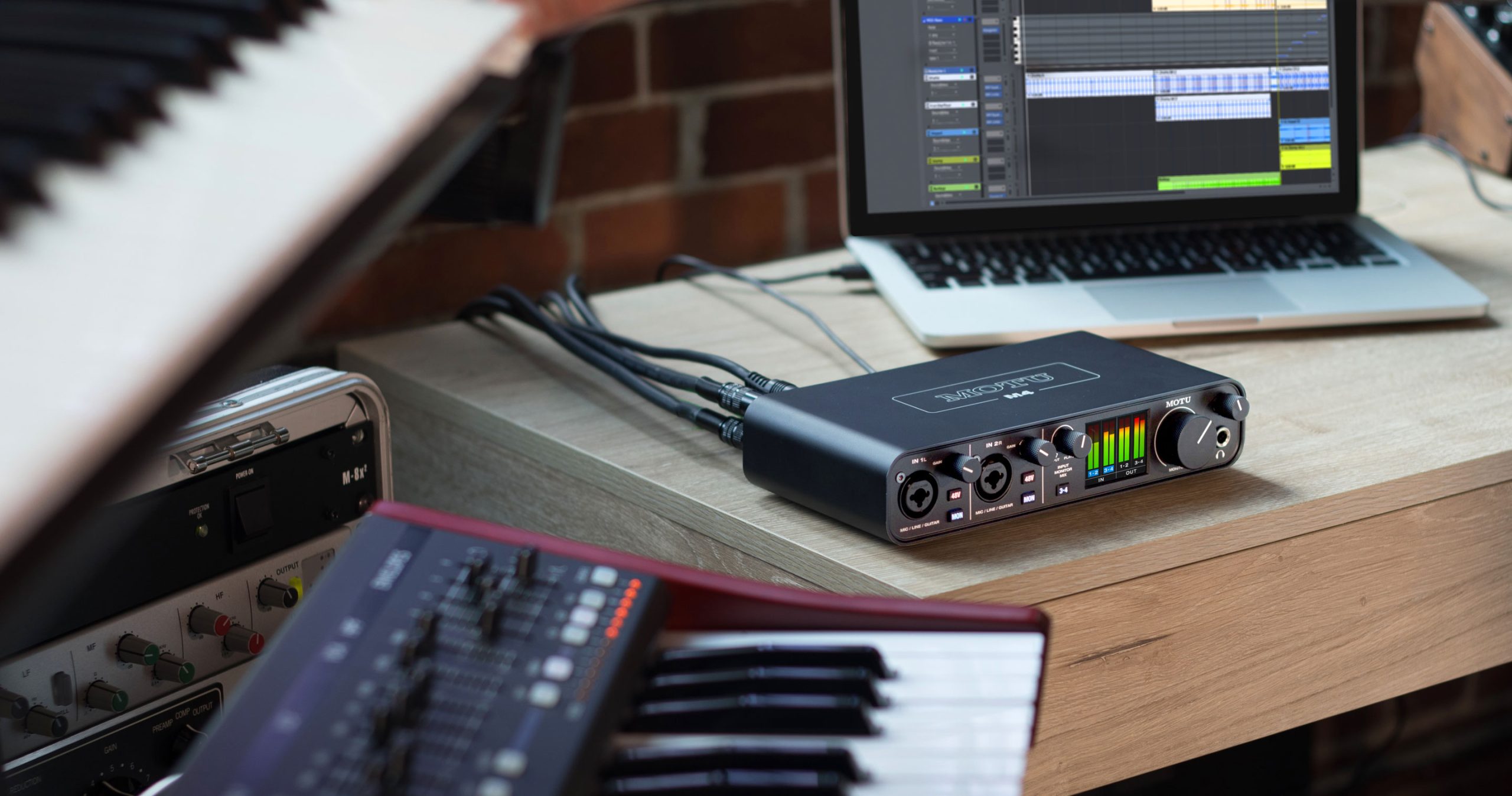
The MOTU M4 is a 4-in/4-out USB-C audio interface designed for professional-grade recording and monitoring. It’s known for its exceptional sound quality and robust build.
Key Features
- I/O Count: 4 inputs (2 XLR/TRS combo, 2 line inputs) and 4 outputs (including balanced main outs and headphone outs).
- Sound Quality: 120dB dynamic range, 192kHz sample rate, and ESS Sabre32 Ultra DAC technology for pristine audio.
- Latency: Ultra-low latency with direct hardware monitoring.
- Software Bundle: Includes Performer Lite DAW and a selection of plugins.
- Build Quality: Solid metal chassis with a sleek, professional design.
- Connectivity: USB-C with compatibility for both Mac and PC.
- Price: Mid-range, offering excellent value for its features.
Pros
- Outstanding audio quality with high-end converters.
- Flexible I/O options for small to medium-sized setups.
- Large, informative LCD screen for real-time metering.
- Excellent for both recording and mixing.
Cons
- Slightly larger and heavier than some competitors.
- No onboard DSP for effects processing.
Best For
The MOTU M4 is ideal for home studio owners who prioritize sound quality and need a reliable, professional-grade interface for recording vocals, instruments, and mixing.
Lewitt Connect 6: The Versatile Performer
Overview
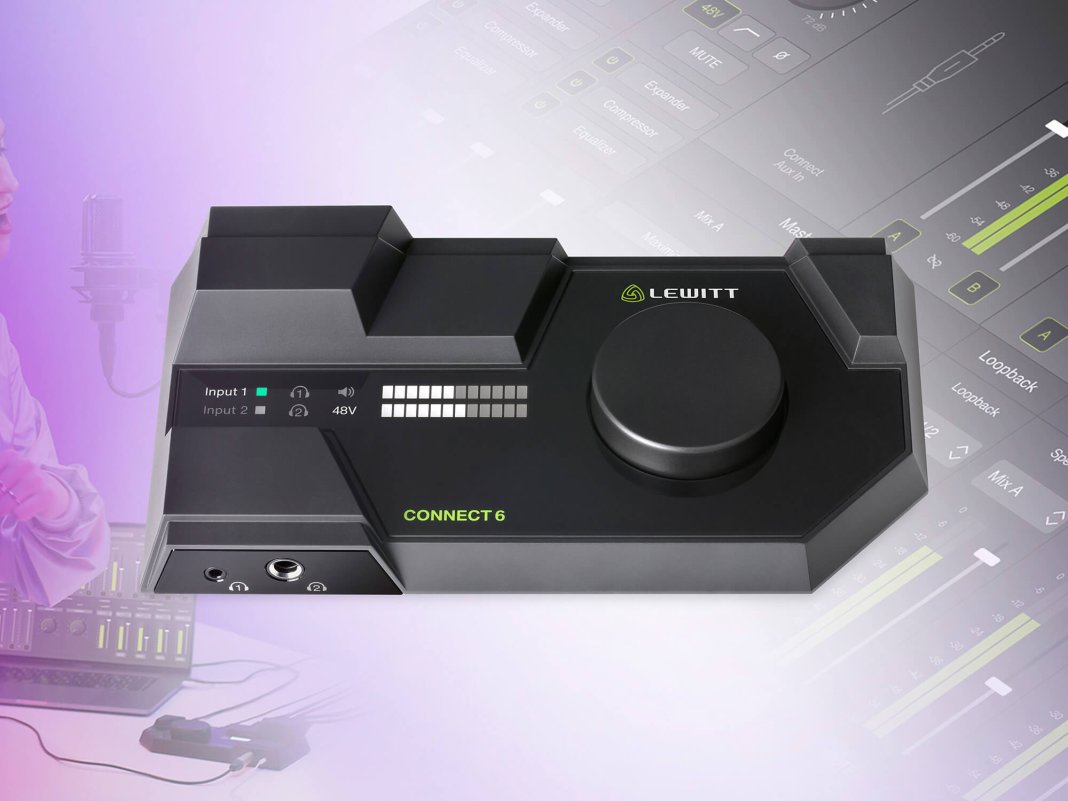
The Lewitt Connect 6 is a 6-in/4-out USB-C audio interface that combines high-quality preamps with versatile connectivity options. It’s designed for musicians and producers who need flexibility.
Key Features
- I/O Count: 6 inputs (2 XLR/TRS combo, 2 line inputs, and 2 additional line inputs via RCA) and 4 outputs.
- Sound Quality: 110dB dynamic range, 192kHz sample rate, and transparent preamps.
- Latency: Low latency with direct monitoring.
- Software Bundle: Includes Ableton Live Lite, Lewitt’s LCT 440 Pure plugin, and additional virtual instruments.
- Build Quality: Compact and lightweight with a durable design.
- Connectivity: USB-C with Mac and PC compatibility.
- Price: Mid-range, competitive with the MOTU M4.
Pros
- Versatile I/O options, including RCA inputs for connecting external gear.
- High-quality preamps with plenty of gain for dynamic microphones.
- Compact and portable design.
- Includes a useful software bundle for music production.
Cons
- Slightly lower dynamic range compared to the MOTU M4.
- RCA inputs may not be useful for all users.
Best For
The Lewitt Connect 6 is perfect for musicians and producers who need a flexible interface for recording multiple sources, including external synths or drum machines.
Arturia MiniFuse 4: The Budget-Friendly Powerhouse
Overview
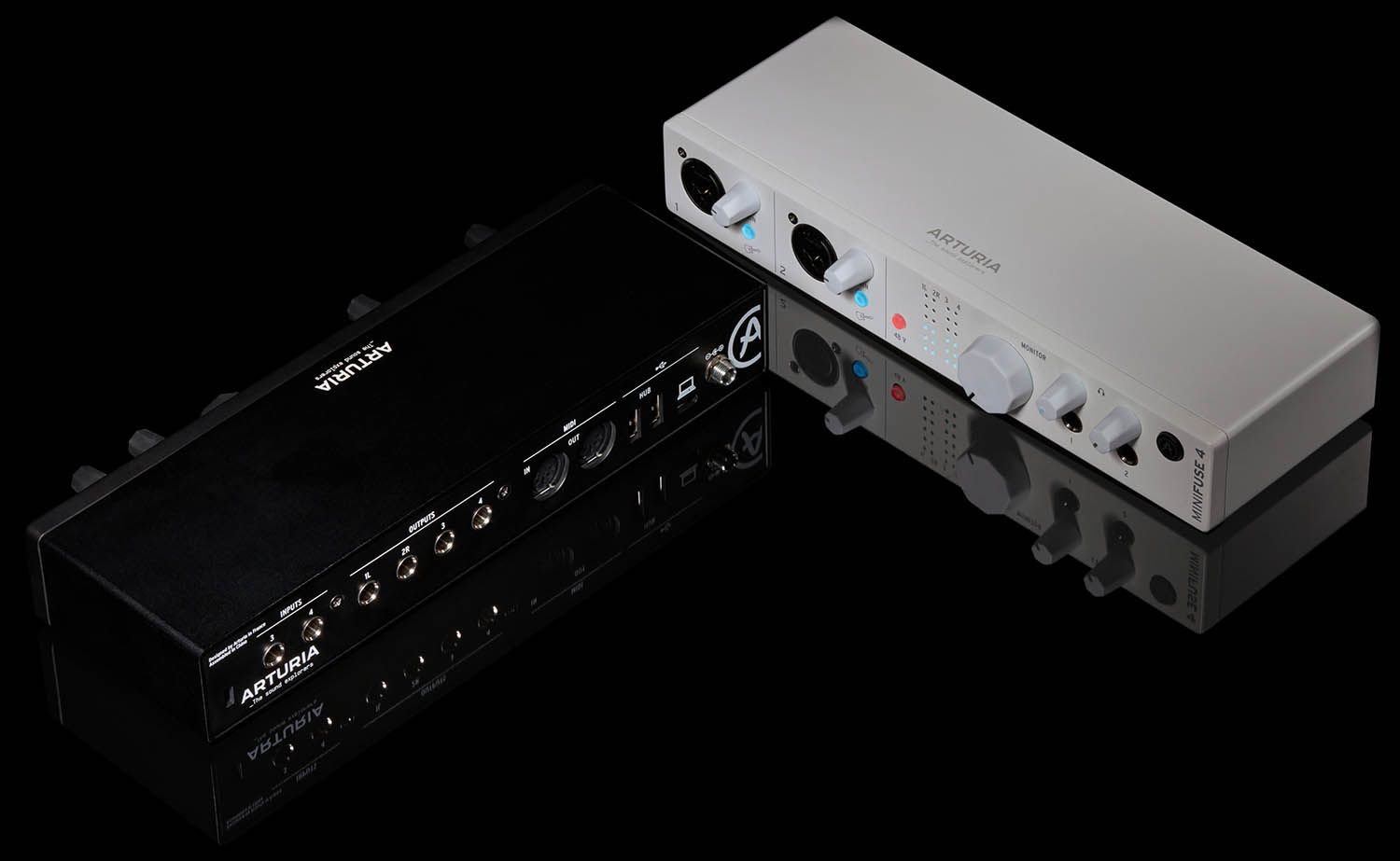
The Arturia MiniFuse 4 is a 4-in/4-out USB-C audio interface that combines affordability with solid performance. It’s designed for beginners and intermediate users who want a reliable interface without breaking the bank.
Key Features
- I/O Count: 4 inputs (2 XLR/TRS combo, 2 line inputs) and 4 outputs.
- Sound Quality: 108dB dynamic range, 192kHz sample rate, and Arturia’s signature preamps.
- Latency: Low latency with direct monitoring.
- Software Bundle: Includes Analog Lab Intro, Ableton Live Lite, and MiniFuse FX Suite.
- Build Quality: Compact and lightweight with a stylish design.
- Connectivity: USB-C with Mac and PC compatibility.
- Price: Budget-friendly, making it an excellent entry-level option.
Pros
- Affordable price with solid performance.
- Includes a generous software bundle for music production.
- Compact and portable design.
- Easy to use, making it great for beginners.
Cons
- Lower dynamic range compared to the MOTU M4 and Lewitt Connect 6.
- Fewer I/O options than the Lewitt Connect 6.
Best For
The Arturia MiniFuse 4 is ideal for beginners or those on a budget who want a reliable interface for recording vocals, guitars, and MIDI instruments.
Comparison Table
| Feature | MOTU M4 | Lewitt Connect 6 | Arturia MiniFuse 4 |
|---|---|---|---|
| I/O Count | 4-in/4-out | 6-in/4-out | 4-in/4-out |
| Sound Quality | 120dB dynamic range | 110dB dynamic range | 108dB dynamic range |
| Latency | Ultra-low | Low | Low |
| Software Bundle | Performer Lite, plugins | Ableton Live Lite, LCT 440 Pure | Analog Lab Intro, Ableton Live Lite, MiniFuse FX Suite |
| Build Quality | Solid metal chassis | Compact and durable | Compact and stylish |
| Connectivity | USB-C | USB-C | USB-C |
| Price | Mid-range | Mid-range | Budget-friendly |
Which One Should You Choose?
- Choose the MOTU M4 if you prioritize sound quality and need a professional-grade interface for recording and mixing.
- Choose the Lewitt Connect 6 if you need versatile I/O options and a compact design for recording multiple sources.
- Choose the Arturia MiniFuse 4 if you’re on a budget or just starting out and want a reliable interface with a great software bundle.
Final Thoughts
Choosing the right audio interface depends on your specific needs, budget, and the type of music production you plan to do. The MOTU M4, Lewitt Connect 6, and Arturia MiniFuse 4 are all excellent choices, but they cater to slightly different audiences. By understanding their strengths and weaknesses, you can make an informed decision that will serve your home studio well for years to come.
Happy recording!