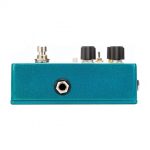
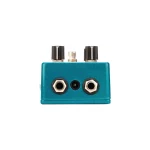
Mode V: chorus/vibrato
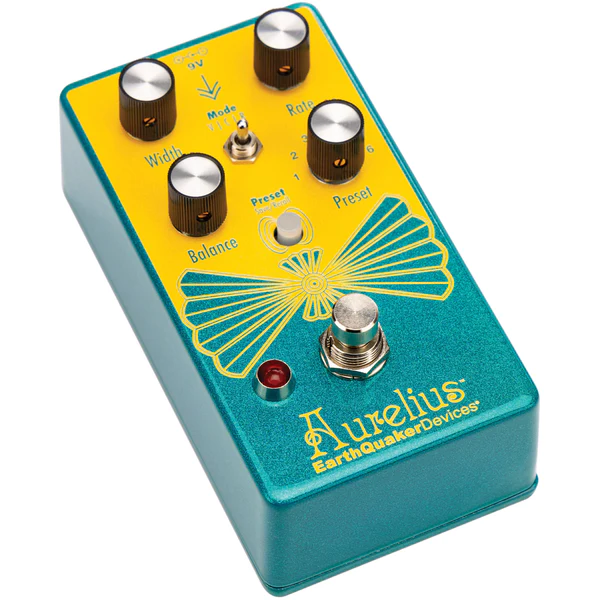
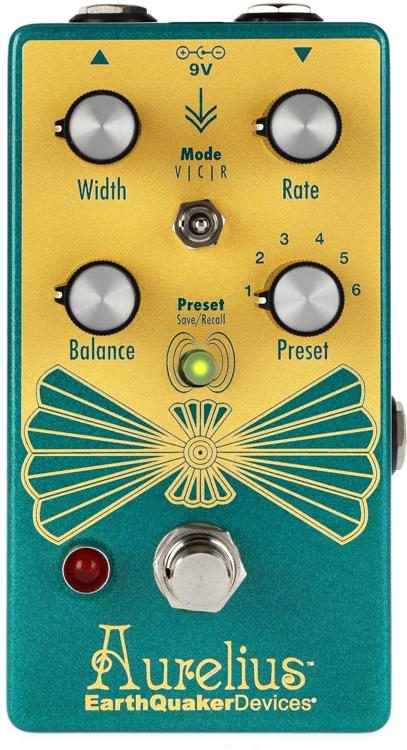
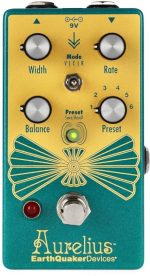
Mode V is a traditional chorus powered by triangle LFO modulation. Turning the balance control clockwise reduces the dry signal while increasing pitch modulation levels. At max settings, Mode V becomes a pristine vibrato with extreme pitch-shifting presence.
Mode C: chorus/flanger
Mode C explores chorus and flanger together, treating them as close cousins within the modulation gang. Mode C pairs sine wave LFO modulation with noticeably slower and warmer rates than vibrato mode. Adjusting Aurelius’ width control in Mode C drastically changes the chorus/flanger interplay. Pushing the width past noon will introduce progressively more feedback for a thicker, more prominent flanger. Mode C is exceptionally versatile and fit for everything from jangly Britpop to crushing high-gain so long as you dial in the mix balance with care.
Mode R: rotary chorus
When maximum modulation is your goal, Mode R is the perfect pick. This rotary chorus effect modulates both amplitude and frequency. EQD studied genuine rotary chorus hardware dating back to the 1940s to ensure a motion-packed doppler effect that’s digitally exaggerated for easy use with guitar, bass, or your instrument of choice. Mode R’s key parameter is width: lower settings bring mids and lows (a true rotary’s woofer frequencies) to the fore. In contrast, higher width settings emphasize treble typically associated with a hardware rotary speaker’s horn.

 Guitar Department
 Bass Department
 Drum Department
 Piano & Keys Department
 Orchestral Department
 Brass & Woodwind
 Acoustic Guitars
 Steel String Acoustics
 Nylon Strings Acoustics
 12-String Acoustics
 Electric Guitars
 Solidbody Guitars
 Semi-hollowbody Guitars
 Hollowbody
 7 & 8 String Electrics
 Headless Guitars
 Ukuleles
 Guitar Strings
 Electric Strings
 Guitar Amplifiers
 Combo Amps
 Amp Heads
 Amp Cabs
 Acoustic Guitar Amps
 Portable Guitar Amps
 Effects Pedals
 Multi-Effects Pedals
 Distortion, Fuzz & Overdrive
 Reverb pedals
 Delay Pedals
 Boost Pedals
 Amp Sims & Modelers
 Compressor Pedals
 EQ Pedals
 Modulation Pedals
 Looper Pedals
 Octave Pedals
 Wah Pedals
 Tuner Pedals
 Pedalboards & Accessories
 Power Supplies
 Guitar Accessories
 Capos
Capos Guitar Straps
 Guitar Tuners
 Guitar Stands
 Guitar Hangers
 Guitar Picks
 Guitar Humidifiers
 Guitar Maintenance
 Guitar Slides
 Guitar Wireless Systems
 Guitar Pickups
 Guitar Bags & Cases
 Electric Bass Guitars
 Acoustic Bass Guitars
 Bass Amps
 Bass Guitar Strings
 Bass Wireless Systems
 Bass Guitar Accessories
 Acoustic Drums
 Snare Drums
 Cymbals
 Cymbal Packs
 Hats
Hats Crashes
 Rides
Rides Chinas
 Splashes
 Electric Drums
 Electric Pads, Triggers & Modules
 Sticks & Beaters
 Drum Sticks
 Brushes & Rods
 Drum Hardware
 Drum Heads
 Drum Accessories
 Percussion
 Marching Band
 Marching Bass Drums
 Marching Snare Drums
 Marching Tenor Drums
 Marching Band Accessories
 Drum Bags & Cases
 Grand Pianos
 Digital Grand Pianos
 Upright Pianos
 Digital Upright Pianos
 Digital Portable Pianos
 Home Keyboards
 Arranger Workstations
 Synthesizers
 Piano & Keyboard Accessories
 Benches & Stools
 Piano & Keyboard Pedals
 Piano & Keyboard Stands
 Violins & Violas
 Electric Violins
 Cellos
 Double Bass
 Orchestral Bags & Cases
 Sheet Music Stands
 Saxophones
 Alto Saxophones
 Soprano Saxophones
 Tenor Saxophones
 Baritone Saxophones
 Trombones
 Trumpets
 Flutes
 Harmonicas
 Clarinets
 Cornet & Flugelhorn
 Recorders
 Woodwind Accessories
 Reeds
Reeds Mouthpieces
 Straps & Harnesses
 Woodwind Parts
 Bags & Cases
 Audio Interfaces
 Studio Monitors
 Studio Microphones
 Studio Preamps
 Studio Mixers
 Studio Synths
 Keyboard Controllers
 Studio Controllers
 Signal Processors
 Studio Bundles
 Studio Software
 Broadcast & Video
 Podcasting & Streaming
 Live Mixing Consoles
 Analogue Mixers
 Powered Mixers
 Mixer Bags & Cases
 Speakers
 Active Speakers
 Passive Speakers
 Active Subwoofers
 Passive Subwoofers
 Portable Speakers
 Column Array Systems
 Microphones
 Wireless Microphones
 Power Amplifiers
 Digital Snakes/Stage Boxes
 Cables & Connectors
 Microphone Cables
 Speaker Cables
 Signal Cables
 Adaptors
 Connectors
 DI Boxes
 Microphone Stands
 Speaker Stands
 Live Events Gear
 Line Array Systems
 Stage Lighting
 Staging
 Trussing
 100v Line Systems
 CD & Media Players
 DJ Mixers
 DJ Controllers
 DJ Accessories
 DJ Bags & Cases
 In-Ear Monitors
 Studio Headphones
 DJ Headphones
 Wireless Headphones
 Earphones
 Hi-Fi Headphones
 Cables & Accessories
 T-Shirts
 Hoodies
 Headwear
 Mugs & Glasses
 Accessories